
Rehab that happens where the falls happen.
Post-stroke, post-surgical and orthopaedic recovery, plus balance training that lowers fall risk — the single biggest threat to an older person’s independence. Same therapist for the whole programme, working to your specialist’s protocol.
First session is a full assessment. Goals and timelines are set with the patient, not for them.
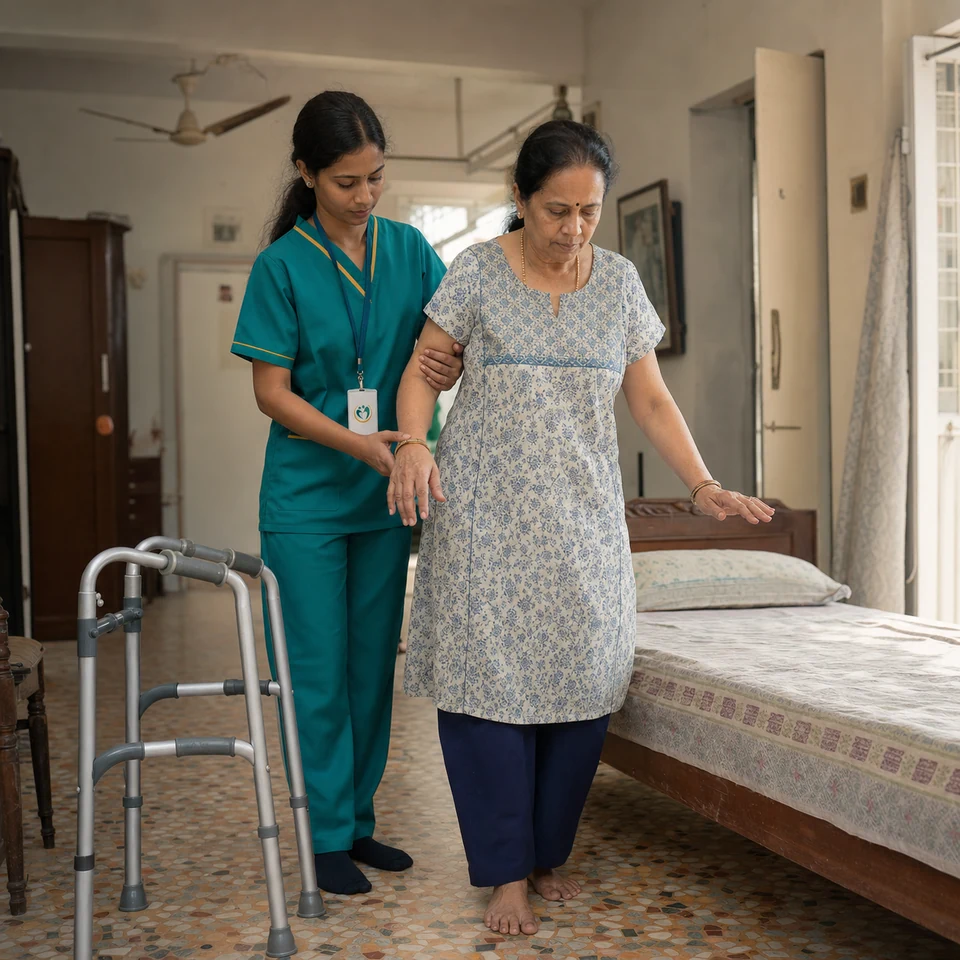
A programme, not a series of appointments
The reason home physiotherapy works is unglamorous: the exercises are practised in the rooms your parent actually moves through, and nobody has to be driven to a clinic three times a week.
Assessment, and honest goals
Mobility, strength, balance and pain measured. Then the real question — what does your parent want back? Walking to the balcony. The stairs to the mandir. The morning walk.
A programme with milestones
A structured plan with measurable checkpoints, built in consultation with your physician and any treating specialist.
Hands-on sessions at home
Guided therapy in the actual environment, progressed safely as strength returns. Adapted to the real stairs, the real bathroom, the real bed height.
Re-assessed and documented
Progress measured again and shared with your doctor and family — so improvement is something you can see on paper, not take on faith.
You should be able to see recovery, not just hope for it
Duration depends entirely on the condition. A post-surgical knee may need three to four weeks of regular sessions; stroke rehabilitation is a much longer journey. Your physiotherapist sets milestones at the first assessment and reviews them with you honestly — including when to stop.
A fall is how most elders lose their independence
Not the condition itself — the fall that follows it. Balance and strength training measurably reduces that risk, which makes physiotherapy one of the few things on this site that is genuinely preventive rather than reactive.
“After the hip surgery we were told to come in three times a week. The physiotherapist came to us instead — same person every session. Amma walks to the balcony on her own now.”
Physiotherapy at home — what families ask
It depends on the condition and the goal. Your physiotherapist sets clear milestones at the first assessment and reviews them with you honestly — including telling you when the programme should end.
Often taken alongside
Your Care Manager coordinates whatever combination you end up with.
Start with a physiotherapy assessment
One session to measure where things stand and agree what recovery should look like.