
Clinical work with the time to actually do it properly.
One patient at a time, in their own home, with a physician-led team behind you and a Care Manager handling the coordination. Forty-five minutes for a consultation, not eight.
Nine roles open across all six Kavach services and Sahaara.
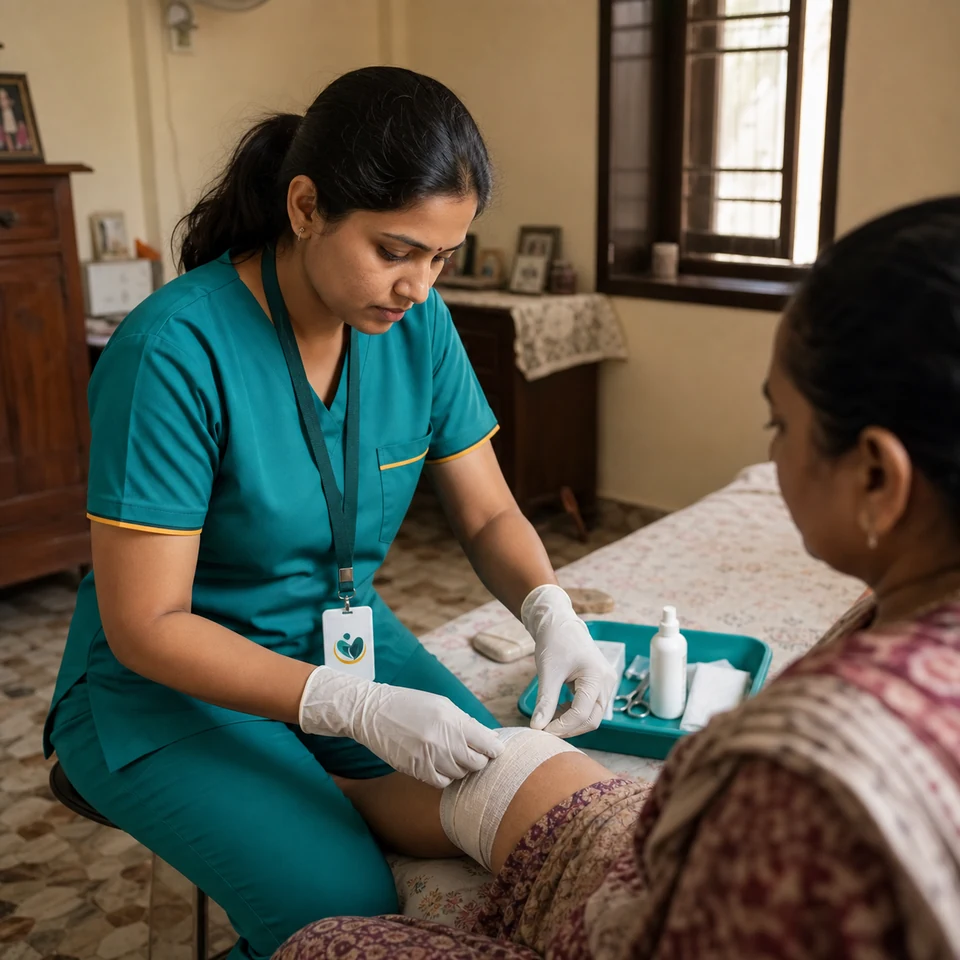
Nine roles, one for every service we deliver
Every posting says what the work actually is, what registration we need to see, and how the engagement runs. Apply to one — we will tell you if another fits better.
Clinical
Physician-led medical care delivered in the home.
Consultant Physician — Home Visits
Internal medicine or geriatrics, seeing patients in their own homes. You set the plan, agree it with the family, and stay the named doctor on that record.
Staff Nurse — Home Nursing
Post-discharge and long-term nursing: wound care, catheters, tracheostomy, IV medication, and the judgement to escalate before something becomes an admission.
Phlebotomist / Lab Technician
Sample collection at the doorstep, mostly early-morning fasting rounds, with cold-chain handling to our partner lab and same-day report follow-through.
Therapy
Rehabilitation that rebuilds function, in the room where it has to work.
Physiotherapist — Home Rehabilitation
Post-stroke, post-surgical and orthopaedic rehab plus fall-risk and balance work. You run your own assessment, set the milestones, and document progress against them.
Senior Physiotherapist — Clinical Lead
Set the rehab protocols, review complex cases with the physicians, and supervise the therapist team. Roughly half clinical, half oversight.
Support
The daily presence and the equipment that make the clinical plan possible.
Nursing Assistant / Attendant
Bathing, feeding, mobility, positioning and skin care — the work that decides whether someone keeps their dignity. Under nursing supervision, never asked to do clinical procedures.
Equipment Technician — Delivery and Setup
Deliver, install and demonstrate hospital cots, oxygen concentrators, air mattresses and mobility aids — then show the family how to use them properly before you leave.
Coordination
The people who hold the whole plan together for a family.
Care Manager
One named point of contact for a set of families: coordinating visits, chasing reports, briefing NRI children on a call, and noticing what nobody reported. Clinical literacy matters more than a clinical degree.
Programme Coordinator — Care at Work
Run the corporate side: onboarding employers, scheduling parent-care reviews for employees, and reporting utilisation back to HR without ever exposing clinical detail.
Four steps, and we tell you where you stand at each one
Usually two to three weeks from application to first shift. Verification is thorough because families are trusting us with someone they love.
You hear back
A real person reads the application and replies either way. If the fit is wrong we say so, and say which role is closer.
A clinical conversation
With the physician or nursing lead who runs your service — about cases, judgement and escalation, not just your CV.
Verification
Registration or certificate checked with the issuing body, two references called, police verification, and an address check.
Induction, then shadowing
Two days on our protocols, documentation and escalation lines, then paired visits until you and your lead both agree you are ready.
The things clinicians tell us are missing elsewhere
Speech therapy, occupational therapy, palliative nursing and dietetics come up often enough on plans that we want people to talk to. No posting yet — write to us and we will keep it live.
Home care is not hospital work. You will be alone in someone’s living room, deciding when to escalate, and dealing with a family in the same room. It suits some clinicians enormously and others not at all — we would rather you knew that before the interview than after your first week.
You see the whole person, and the whole house
In a clinic you get a history. At home you see the stairs, the medicine drawer, the daughter who has not slept, the bathroom with nothing to hold. The clinical picture is simply more complete — and so is what you can do about it.
“I had spent eleven years in wards. The first month here I kept waiting for the next patient to be wheeled in — and then realised the hour was actually mine to use.”
Before you apply
No. Most of our clinicians came from hospitals. What we look for is registration in order, sound clinical judgement, and the temperament for working alone in someone’s home with the family watching. Induction and paired visits cover the rest.
Not sure which role fits?
Send your CV with a line about the work you want to be doing. We read every one, and we will tell you honestly if there is nothing right now.